



Improve Newborn Survival With Targeted Resuscitation Training
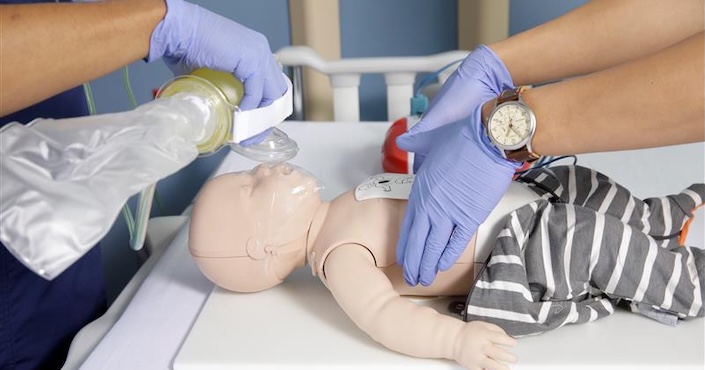
The first moments of life are the most critical
Bringing a new life into the world is a profound responsibility. For healthcare workers, the minutes immediately following a birth offer a critical window to make a life-saving impact. Providing effective, timely care is crucial to newborn survival. The right training prepares your perinatal and neonatal teams for these high-stakes moments.
By equipping clinicians with the exact skills they need, you give every newborn the best possible start in life. Aligning clinical practice with advanced training methods ensures a high standard of patient care and empowers your staff to handle emergencies with clarity and precision.
Modern training overcomes traditional challenges
Traditional training methods often fall short when it comes to preparing clinical teams for the realities of a neonatal resuscitation event. Simply knowing the correct clinical steps is not enough; teams must be able to execute those steps together, under pressure, and in real time. And because these events are infrequent, it can be difficult for clinicians to maintain critical skills between emergencies. Effective teamwork and clear communication are essential to a successful resuscitation, but standard classroom-based education struggles to replicate these scenarios.
A modern training approach addresses these challenges directly by closing the gap between theory and practice, helping teams coordinate more effectively and respond with confidence when seconds matter.
Core elements of effective neonatal resuscitation training programs
To truly enhance clinical competencies and improve patient outcomes, facilities need comprehensive neonatal resuscitation training programs. The most successful education models share several foundational elements. Healthcare leaders should look for these specific characteristics when evaluating their clinical development strategies.
A blended learning model improves skill retention
A blended learning model combines self-paced online coursework with hands-on skills practice. This approach allows clinicians to learn foundational knowledge at their own pace. When they gather for in-person sessions, they can focus entirely on practical application and team coordination. Blended learning respects the busy schedules of clinical staff while reinforcing knowledge more effectively than a single, one-time class. It provides a flexible path to competency that minimizes disruption to daily hospital operations.
Simulation and debriefing build team confidence
Realistic, hands-on simulations prepare teams to work together seamlessly in high-stress environments. Practicing on advanced manikins helps staff internalize processes so their physical responses become second nature. Following the simulation, structured debriefing sessions are essential. These conversations allow teams to discuss what went well and identify areas for improvement in a safe, constructive space.
This cycle of practice and reflection fosters a culture of continuous quality improvement and peer support. It also builds the critical communication skills needed during a real neonatal emergency.
An evidence-based curriculum ensures quality care
The best education strategies are built on a foundation of current, evidence-based practices. Training that aligns with the latest scientific guidelines from authoritative bodies ensures the highest standard of care. This commitment to quality and patient safety is exactly what healthcare leaders look for to achieve better compliance and care outcomes. Consistent, evidence-based learning helps reduce staff turnover by ensuring employees feel competent and well-supported in their roles.
A new standard in neonatal resuscitation is here
HealthStream has partnered with the American Red Cross to offer a modern, comprehensive program that sets a new standard for resuscitation education. You can read more about this partnership and their market-leading Resuscitation Suite.
The resulting Neonatal Advanced Life Support (NALS) program delivers a consistent, evidence-based curriculum designed for the entire care team. NALS uses a blended learning approach that combines online coursework with hands-on, instructor-led training. This ensures your staff receives the highest quality education tailored to real-world scenarios. To understand how this impacts your facility, watch our webinar on NALS that details a new era in neonatal care.
Build a comprehensive neonatal care program
Excellence in neonatal care extends well beyond the delivery room. A truly effective program supports staff through all phases of care for vulnerable newborns. Post-resuscitation stabilization and pre-transport care are just as important as the initial intervention.
To support this continuum of care, The S.T.A.B.L.E. Program serves as a key component of post-resuscitation education. It focuses exclusively on the post-resuscitation and pre-transport stabilization care of sick infants. By partnering with HealthStream, you gain access to a full suite of solutions for comprehensive neonatal education.
Prepare your team to save your smallest patients
Investing in targeted, modern training is a direct investment in newborn survival. By equipping your perinatal care teams with the best educational resources, you empower them to act with confidence and clinical competence. This directly leads to better outcomes for newborns and increased satisfaction among your staff.
Learn how the Neonatal Advanced Life Support program can help your organization improve team performance and patient outcomes.