Fast, convenient care depends on confident teams able to adapt in real-time. Support urgent care staff with workforce training, compliance education, and onboarding tools designed to improve patient throughput and consistent care experiences.
.avif)
High staff turnover, rapid onboarding, and shifting regulations make compliance challenging in urgent care. Improving documentation accuracy, reducing audit risk, and strengthening policy adherence leads to safer, more consistent patient care outomes.
Urgent care teams must respond quickly when patient conditions escalate unexpectedly. Standardizing and modernizing urgent care resuscitation training allows teams to improve emergency response readiness, support org-wide certification compliance, and strengthen patient safety across every shift.
.avif)
.avif)
Urgent care clinicians need education that fits fast-paced schedules and evolving care demands. Provide self-paced accredited CME that supports clinical competency, continuing education compliance, and consistent patient care.

.avif)
We provide urgent care workforce solutions that support providers across walk-in care and same-day care settings. Improve and streamline operational efficiency, rapid onboarding, compliance education, and patient throughput across frontline clinical teams.
.avif)
Prepare for cardiac emergencies with resuscitation training—designed to support consistent performance, and drive better outcomes in urgent care settings.
.avif)
Help urgent care teams improve onboarding, patient throughput, and clinical readiness with flexible safety & compliance training.
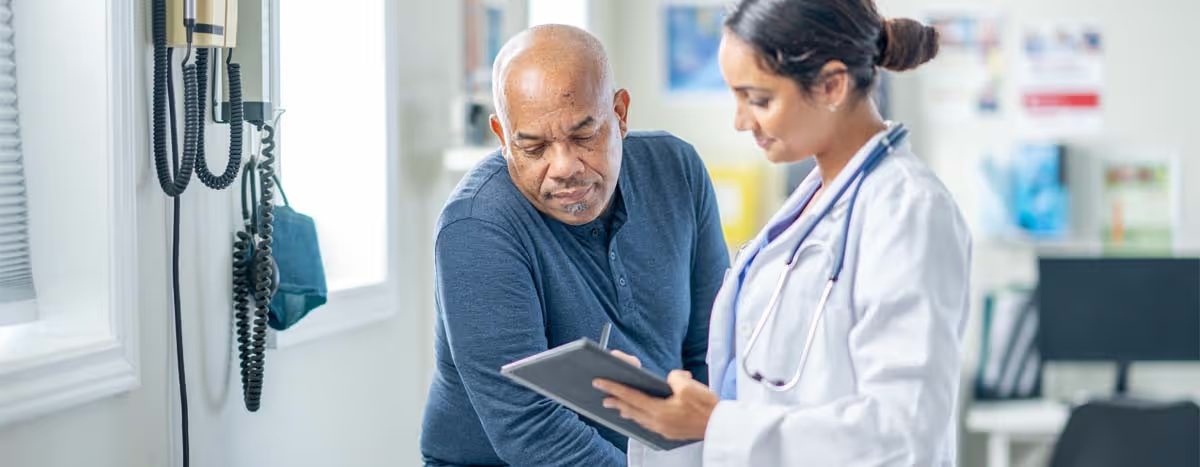
Access accredited, self-paced courses that help urgent care professionals strengthen clinical competencies and meet continuing education goals.

Bring it all together with seamless access to the largest healthcare content marketplace, exclusive applications, specialized tools, and significant subscriber discounts.
Urgent care organizations face increasing workforce, operational, and compliance challenges across fast-paced walk-in care and same-day care environments. Solutions designed specifically for urgent care can help providers improve readiness, strengthen compliance education, enhance patient throughput, and deliver consistent care across locations.
Urgent care centers can improve workplace safety training by implementing healthcare workforce solutions for urgent care that combine automation, compliance management, and ongoing education into one connected platform. Modern urgent care clinics and walk-in clinics operate in fast-paced urgent care settings where staff must balance patient care, HIPAA requirements, patient data protection, emergency response, and regulatory compliance. Using urgent care training software with interoperability across practice management and EMR system platforms helps organizations streamline training assignments, track completion metrics, and improve functionality across the urgent care workforce. Many organizations also use urgent care compliance software and patient safety training software to automate reminders, manage certifications, and support audit readiness.
Effective workplace safety education for urgent care staff should include urgent care workplace safety training, infection prevention, workplace violence prevention, urgent care resuscitation training, DEA training for urgent care providers, emergency preparedness training for urgent care clinics, and ongoing urgent care continuing education. Online CME and DEA training for urgent care providers helps clinicians stay current on evolving regulations and clinical best practices while improving patient safety and patient satisfaction. By investing in workforce training solutions for urgent care centers, organizations can strengthen compliance, improve workforce readiness, support patient engagement, and create safer environments for both employees and patients.
Emergency preparedness is critical in urgent care settings because urgent care clinics and walk-in clinics often serve as frontline access points for patients experiencing unexpected illnesses, injuries, infectious disease outbreaks, or medical emergencies. Without proper urgent care emergency preparedness protocols and workplace safety education for urgent care staff, organizations may struggle to respond effectively during high-pressure situations that impact patient safety, staff safety, operational continuity, and patient satisfaction. Modern healthcare workforce solutions for urgent care help organizations strengthen readiness through automation, real-time training metrics, and interoperability with practice management and EMR system platforms, ensuring employees receive timely education and compliance updates when emergencies occur.
Comprehensive emergency preparedness training for urgent care clinics should include urgent care resuscitation training, infection prevention, workplace violence response, HIPAA and patient data protection, disaster response procedures, and urgent care compliance education. Many urgent care facilities use urgent care training software, patient safety training software, and urgent care compliance software to deliver ongoing urgent care continuing education, online CME and DEA training for urgent care providers, and workforce training solutions for urgent care centers that support regulatory compliance and workforce readiness. By investing in healthcare compliance management and emergency preparedness initiatives, urgent care practices can improve functionality, strengthen patient engagement, protect staff, and deliver safer, more consistent care during both everyday operations and unexpected emergencies.
Urgent care organizations can improve workforce readiness by implementing healthcare workforce solutions for urgent care that combine automation, compliance management, continuing education, and skills development into a unified training strategy. Because urgent care clinics and walk-in clinics operate in fast-paced urgent care settings with evolving regulations, fluctuating patient volumes, and diverse clinical scenarios, staff must be prepared to respond quickly while maintaining patient safety, HIPAA compliance, and high-quality patient engagement. Many organizations use urgent care training software integrated with practice management and EMR system platforms to streamline onboarding, track workforce metrics, improve interoperability, and ensure employees complete required education on time.Effective workforce training solutions for urgent care centers should include urgent care workplace safety training, urgent care compliance education, emergency preparedness training for urgent care clinics, urgent care resuscitation training, DEA training for urgent care providers, and ongoing urgent care continuing education. Online CME and DEA training for urgent care providers helps clinicians stay current with changing regulations and clinical best practices while supporting patient satisfaction and operational functionality. By leveraging patient safety training software, urgent care compliance software, and healthcare compliance management tools, urgent care facilities can strengthen workforce readiness, reduce administrative burden, protect patient data, and create safer, more resilient urgent care practices.
Urgent care centers support continuing education for clinicians by using urgent care training software and healthcare workforce solutions for urgent care that provide flexible, role-based learning opportunities across fast-paced urgent care settings. Because urgent care clinics and walk-in clinics manage a wide range of patient conditions, evolving regulations, and high patient volumes, clinicians must stay current on clinical best practices, HIPAA requirements, patient data protection, and patient safety standards. Many organizations integrate urgent care continuing education programs with practice management and EMR system platforms to improve interoperability, automate course assignments, track completion metrics, and simplify healthcare compliance management.
Comprehensive continuing education programs often include online CME and DEA training for urgent care providers, urgent care compliance education, urgent care resuscitation training, workplace safety education for urgent care staff, emergency preparedness training for urgent care clinics, and ongoing patient safety education. By leveraging automation, urgent care compliance software, and patient safety training software, urgent care facilities can improve functionality, reduce administrative burden, strengthen workforce readiness, and support higher levels of patient engagement and patient satisfaction. These workforce training solutions for urgent care centers help clinicians maintain compliance, expand clinical knowledge, and deliver safer, more consistent care across the urgent care practice.
Urgent care centers need healthcare workforce solutions for urgent care that help organizations manage training, compliance, workforce readiness, and operational efficiency in fast-paced urgent care settings. Because urgent care clinics and walk-in clinics must balance patient safety, patient engagement, HIPAA compliance, staffing challenges, and evolving regulatory requirements, many organizations are adopting connected platforms that combine automation, interoperability, and real-time workforce metrics. Integrated solutions that work alongside practice management and EMR system platforms can streamline onboarding, simplify healthcare compliance management, improve functionality, and help leaders track education, certifications, and workforce performance across the urgent care practice.
Effective workforce training solutions for urgent care centers should include urgent care training software, urgent care compliance software, patient safety training software, urgent care workplace safety training, emergency preparedness training for urgent care clinics, and urgent care continuing education. Many organizations also prioritize online CME and DEA training for urgent care providers, urgent care resuscitation training, workplace safety education for urgent care staff, and urgent care compliance and patient safety education to support clinical excellence and audit readiness. By investing in scalable healthcare workforce solutions, urgent care facilities can strengthen workforce readiness, protect patient data, improve patient satisfaction, and create safer, more resilient care environments for both patients and staff.
Urgent care organizations manage compliance and safety education by using connected healthcare workforce solutions for urgent care that centralize training, automate assignments, and track workforce readiness across fast-paced urgent care settings. Because urgent care clinics and walk-in clinics must meet strict HIPAA requirements, protect patient data, and maintain evolving regulatory standards, many organizations rely on urgent care compliance software and urgent care training software integrated with practice management and EMR system platforms. These systems improve interoperability, streamline healthcare compliance management, automate reminders, and provide real-time metrics that help leaders monitor completion rates, certifications, and audit readiness across the urgent care workforce.
Comprehensive urgent care compliance and patient safety education programs often include urgent care workplace safety training, workplace safety education for urgent care staff, emergency preparedness training for urgent care clinics, infection prevention, urgent care resuscitation training, and online CME and DEA training for urgent care providers. Many urgent care facilities also use patient safety training software and urgent care continuing education programs to support ongoing learning, strengthen workforce readiness, improve functionality, and enhance patient engagement and patient satisfaction. By investing in workforce training solutions for urgent care centers, organizations can reduce risk, improve operational consistency, and create safer environments for both employees and patients.


Selecting the right Learning Management System (LMS) is critical for healthcare organizations navigating complex compliance standards, clinical training, and continuing education. The Healthcare LMS Buyer’s Guide simplifies your search—offering expert tips, comparison criteria, and a healthcare-specific checklist to help you choose a system that supports your workforce and improves patient care. Whether you're replacing outdated tools or choosing your first LMS, this guide gives you the clarity to move forward with confidence.
Discover how healthcare workforce technology helps urgent care staff improve operational workflows, accelerate rapid onboarding, strengthen compliance education, and support higher patient throughput in fast-paced same-day care environments.
HealthStream is here to help you:


