
From critical access hospital training and clinical competency development to compliance management, workforce readiness, and streamlined reporting, the HealthStream Critical Access Suite brings essential workforce and compliance solutions together in one connected experience.
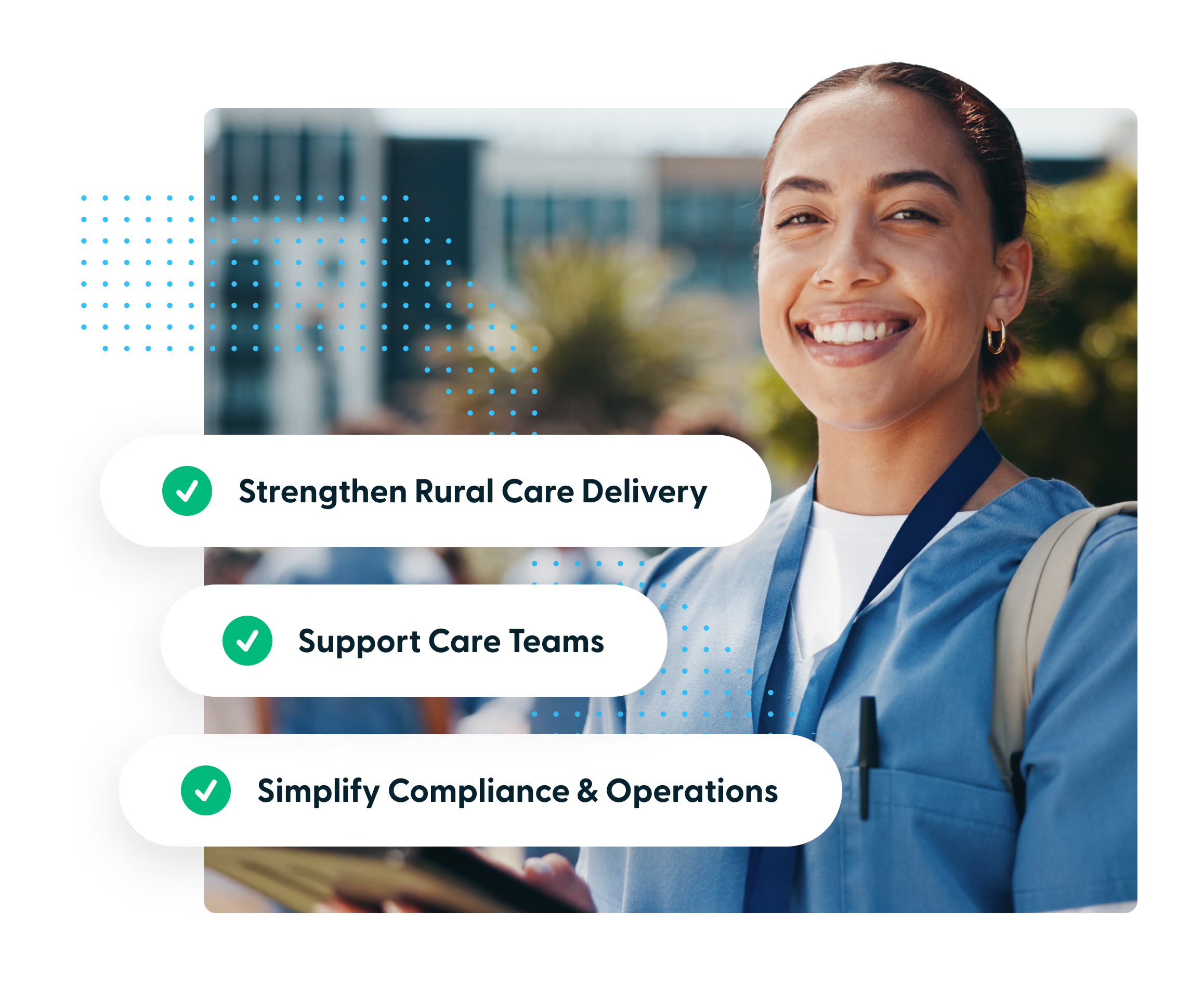
Build a confident, prepared CAH workforce, simplify regulatory readiness, and deliver high-quality care across your rural community.
The HealthStream Critical Access Suite brings workforce development, competency, and compliance together to help rural hospitals build workforce readiness, reduce administrative burden, and confidently meet the unique demands of critical access care.
Book Demo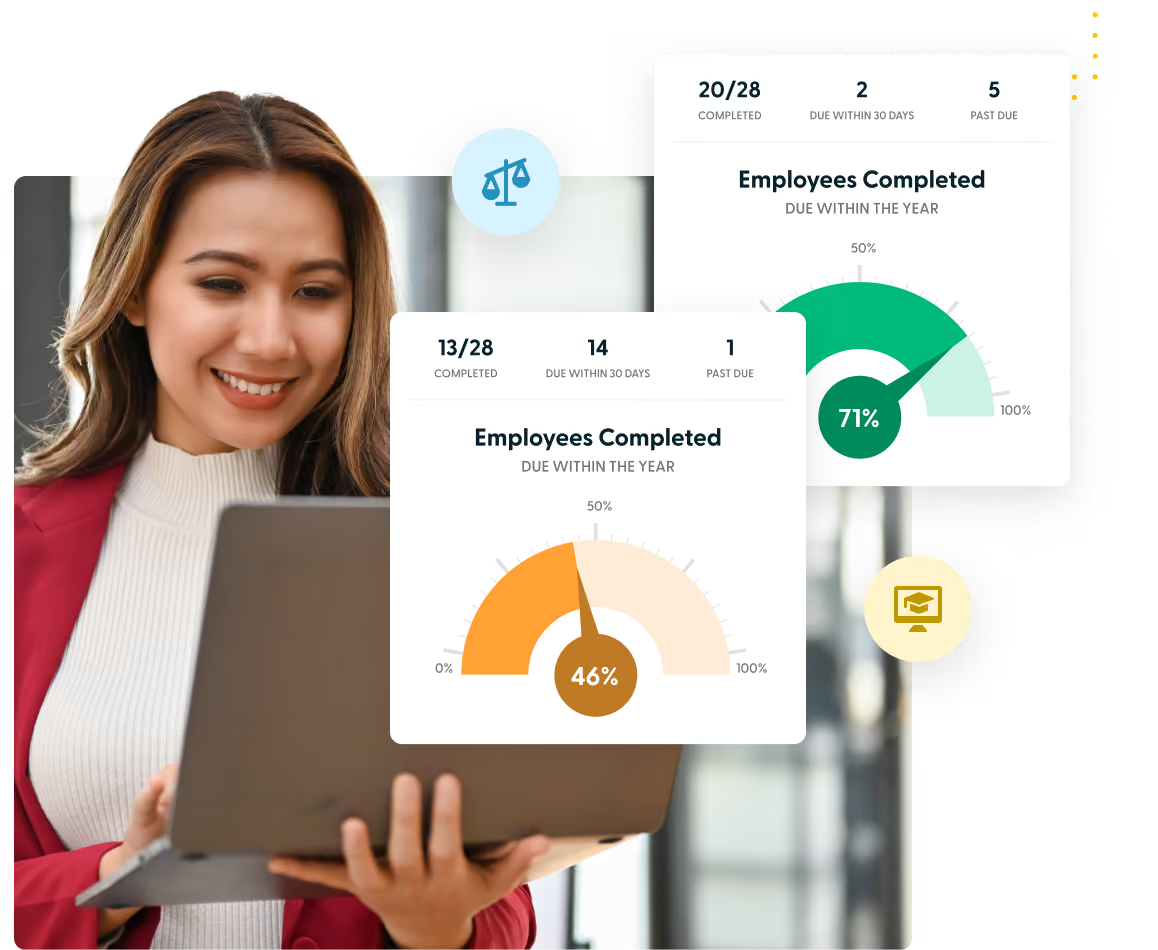
Equip critical access hospital staff with purpose-built CAH training to maintain compliance and deliver quality care—all while keeping workflows seamless and efficient.

Provide critical access hospital leaders with the tools they need to ensure workforce readiness, maintain CAH compliance, and deliver consistent, high-quality care.
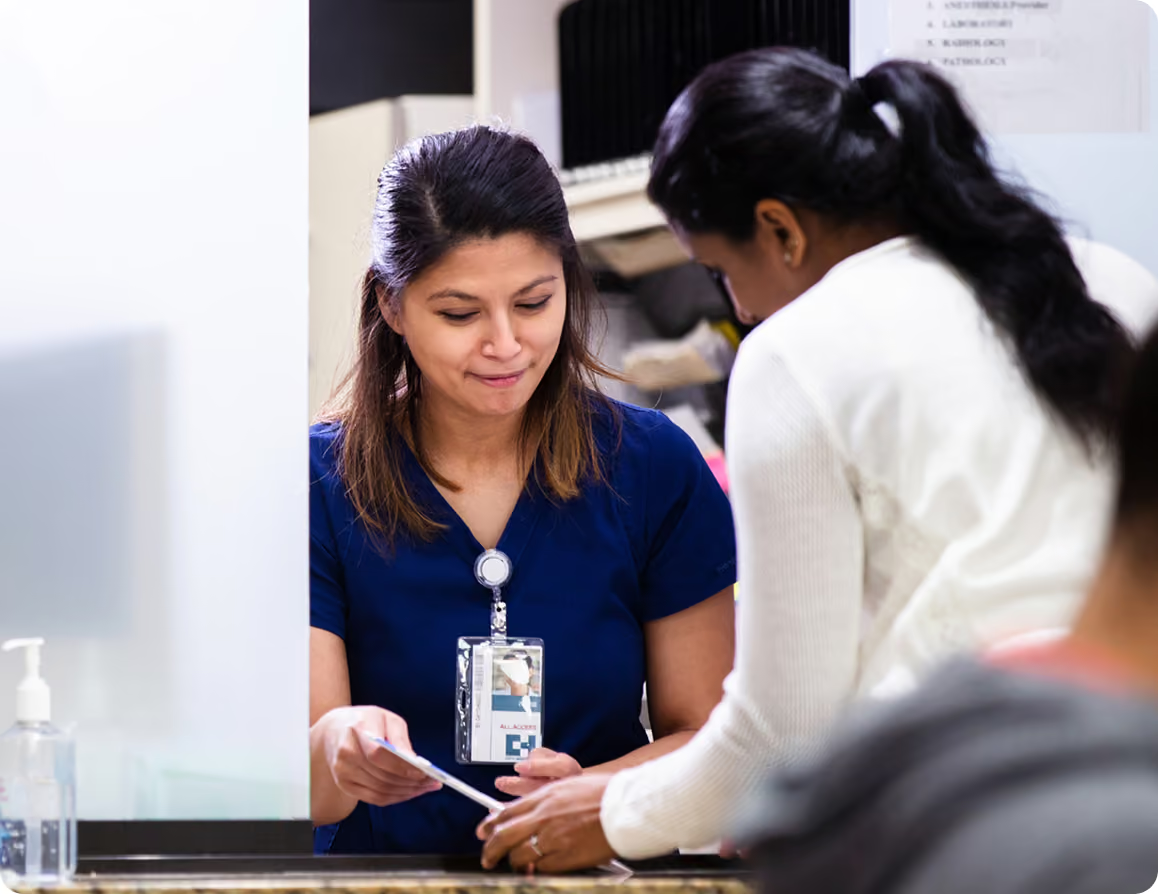
Critical access hospitals rely on lean, cross-trained teams to meet a wide range of patient needs. Ongoing staff education, clinical competency development, and efficient workflows help employees stay prepared across roles while creating meaningful opportunities for professional growth and long-term retention.


Support every role across the organization, so cross-trained teams stay compliant, confident, and focused on providing high-quality care.
.avif)
Provide clear workforce development pathways
.avif)
Build clinical competency and confidence
.avif)
Maintain CAH compliance and survey readiness
.avif)
Deliver safe, high-quality rural care
Our goal is to provide an unparalleled experience for our customers. Through monthly webinars and user groups, we strive to keep our users up-to-date with the latest features and industry trends. Our dedicated onboarding teams are also available to assist new customers in getting started, while our ongoing support ensures that your team is set up for success.
.svg)
Need assistance? HealthStream’s friendly support team is here to provide quick solutions by calling 877-301-HSTM(4786) or email customer.service@healthstream.com from 7 a.m. – 7 p.m. CST (holidays excluded). We’ll ensure your questions are answered and challenges resolved effectively.
.svg)
Join quarterly HealthStream User Groups (HUGs) to connect with peers, share valuable insights, and discover best practices. Collaborate with other users to enhance your experience and get the most out of HealthStream's solutions.
063e7d0363bd4957b69deec8b8c76c4f.svg)
Discover the HealthStream Community, where users come together to connect, collaborate, and share knowledge. Unlock professional growth and maximize your HealthStream experience through shared learning and meaningful connections.
.svg)
Stay ahead with HealthStream by opting in to our monthly product updates. Be the first to know about new features, improvements, and tools designed to enhance your experience.
.svg)
Experience personalized support with HealthStream's Success Management, where our team partners with you to achieve your goals and unlock the full value of your solutions.
We provide rural hospital software solutions to streamline operations, ensure compliance, and address the unique challenges of CAH healthcare.

Everything your clinical staff needs to grow — 2,500+ CE courses, cert prep, and a free mobile app in one subscription.
.avif)
Build skills that matter in critical access settings—flexible CE designed for nurses delivering care across diverse patient needs.
.avif)
Drive staff readiness and lasting outcomes with adaptable resuscitation training.

Bring it all together with seamless access to the largest healthcare content marketplace, exclusive applications, specialized tools, and significant subscriber discounts.
Achieving success in critical access hospitals (CAHs) starts with addressing unique rural healthcare challenges, enhancing staff readiness, and streamlining operational efficiency to meet community needs effectively.
Critical access hospitals need software solutions that support the unique workforce, compliance, and operational demands of rural healthcare. Critical access hospital software can help centralize staff education, clinical competency management, compliance training, license and certification tracking, workforce scheduling, and reporting rather than requiring teams to manage these functions across disconnected systems or manual processes.
For smaller hospitals with lean, cross-trained teams, a unified approach can also reduce administrative burden and provide greater visibility into workforce readiness. Critical access hospital solutions that connect training, competency, compliance, and workforce management can help leaders identify gaps, maintain consistent documentation, and keep staff prepared to deliver safe, high-quality care.
Critical access hospitals can strengthen workforce readiness through consistent onboarding, role-relevant education, clinical competency assessment, continuing education, and ongoing professional development. Because CAH employees may work across multiple departments or responsibilities, training should prepare staff for a broad range of clinical situations.
A rural hospital workforce development strategy should also make it easier for employees to continue building skills throughout their careers. Accessible education and clear career pathways can help create confident, prepared teams while supporting employee development, engagement, and retention.
Critical access hospital training should address both regulatory requirements and the clinical realities of rural care. This may include healthcare compliance training related to CMS, OSHA, HIPAA, and other requirements, along with education in areas such as emergency care, infection prevention, medication safety, triage, precepting, and other clinical skills relevant to each employee's role.
Training is particularly important for cross-trained staff who may need to maintain competency across multiple departments or types of care. A comprehensive hospital staff education program can combine required training, clinical competency development, continuing education, and skills validation to help employees stay current and prepared across their responsibilities.
Critical access hospitals must maintain compliance with CMS Conditions of Participation (CoPs) specific to the CAH designation. A proactive approach includes staying current with regulatory requirements, providing appropriate staff education, maintaining accurate training and competency records, and regularly reviewing processes for potential compliance gaps.
Critical access hospital compliance is easier to manage when leaders have centralized visibility into training completion, competencies, licenses, certifications, and other workforce requirements. Consistent documentation and ongoing monitoring can help hospitals demonstrate compliance and remain prepared for CMS surveys and other regulatory reviews.
Critical access hospital survey readiness should be an ongoing process rather than an activity that begins immediately before a survey. Maintaining current staff education, competency documentation, regulatory training, licenses, certifications, and standardized processes helps organizations identify and address gaps before they become survey findings.
Centralized compliance management can also give leaders a clearer picture of readiness across departments. Instead of relying on spreadsheets or manually gathering records when surveyors arrive, rural hospital compliance software and standardized reporting can help teams access documentation more efficiently and demonstrate that workforce requirements are being consistently managed.
Clinical competency in critical access hospitals can be especially complex because lean teams often require employees to work across departments and maintain skills for a wide range of patient needs. Organizations should define role-specific competencies, provide relevant education, assess skills consistently, and maintain documentation that demonstrates each employee's readiness to perform assigned responsibilities.
Clinical competency software for healthcare organizations can help standardize assessments and provide greater visibility into competency status across teams and departments. For nursing teams in particular, competency assessment tools can help leaders identify knowledge or skill gaps, reinforce consistent performance, and document readiness across multiple clinical responsibilities.
A healthcare LMS for rural hospitals should make it easy to assign, deliver, and track education across clinical and non-clinical roles. Important capabilities include healthcare-specific training, compliance education, continuing education, competency assessment, centralized reporting, and the flexibility to incorporate organization-specific policies, procedures, and learning content.
For critical access hospitals, ease of administration is particularly important. A critical access hospital learning management system should help leaders efficiently manage training across departments, monitor completion and competency status, and maintain accessible records without creating unnecessary administrative work for already-busy teams.
Rural hospital workforce development can support recruitment and retention by giving employees opportunities to build skills, maintain credentials, earn continuing education, and grow professionally without leaving their organization. Strong onboarding and ongoing development can also help employees feel more prepared for their roles and supported as their responsibilities evolve.
For critical access hospitals competing for healthcare talent, professional development can be an important part of the employee experience. Creating accessible pathways for learning, clinical competency development, and career growth can improve employee satisfaction and engagement while helping hospitals build a more stable, prepared workforce over time.


Harnessing 'quick wins' can be a powerful strategy for critical access hospitals (CAHs) to bolster their operations and ease the financial and staffing strains that they encounter in a persistently challenging healthcare environment.
Discover how the HealthStream Critical Access Suite helps strengthen workforce readiness, simplify compliance, and support high-quality rural care.
HealthStream is here to help you:



.svg)
.svg)
.svg)