


Resuscitation Training Resource Center
Meeting resuscitation training standards and maintaining compliance requirements doesn't have to be complex. We're committed to helping healthcare organizations stay up-to-date with the latest guidance and standards for resuscitation training programs.
Where do resuscitation guidelines come from?
Resuscitation science is clear and available to everyone, thanks to the International Liaison Committee on Resuscitation (ILCOR). Founded in 1992, ILCOR provides a forum for liaison between principal resuscitation organizations worldwide. ILCOR has a mission to promote, disseminate, and advocate international implementation of evidence-informed resuscitation and first-aid, using transparent evaluation and consensus summary of scientific data.
Improving Resuscitation Outcomes, Together
We're proud to collaborate with the American Red Cross, the premier provider of resuscitation and first aid training, to help healthcare organizations across the country comprehend, train, and implement the latest science in resuscitation education. Together we have supported over one million certifications in healthcare across Basic Life Support (BLS), Advanced Life Support (ALS), and Pediatric Advanced Life Support (PALS).
American Red Cross Healthcare Guidelines Database
The Healthcare Guidelines Database released on December 5, 2023 offers the latest evidence and science informed by the American Red Cross Scientific Advisory Council in a brand-new searchable online repository. This comprehensive and well-organized database centralizes more than 160 topics spanning basic, advanced, pediatric and neonatal resuscitation as well as resuscitation education science, enabling users to quickly find the latest Red Cross Guidelines, evidence summaries and insights and implications for each topic.
.png)
Collecting and analyzing resuscitation data
Effective January 2022, The Joint Commission issued new and updated resuscitation standards for hospitals and critical access hospitals. Overall, the revised standards are intended to reduce unnecessary variations in practice and encourage hospitals to adopt a more proactive and responsive approach to resuscitation and post-resuscitation care to maximize patient survival with the best possible neurological outcomes.
American Red Cross Guidelines Highlights
Red Cross education and training goes beyond a cardiac focus and incorporates a broad spectrum of evidence-based recommendations from organizations representing pediatricians, emergency and critical care physicians, surgeons and obstetricians. All Red Cross healthcare guidelines and programs are overseen and continuously updated by the expert members of the Red Cross Scientific Advisory Council. The result is a wide array of robust and unique programs of unparalleled excellence.

Resuscitation standards for hospitals
The American Red Cross and HealthStream offer innovative and adaptive resuscitation training programs to equip hospitals and critical access hospitals with the latest, evidence-based information that align with the new and revised standards for resuscitation training from The Joint Commission.
American Red Cross Code Cards
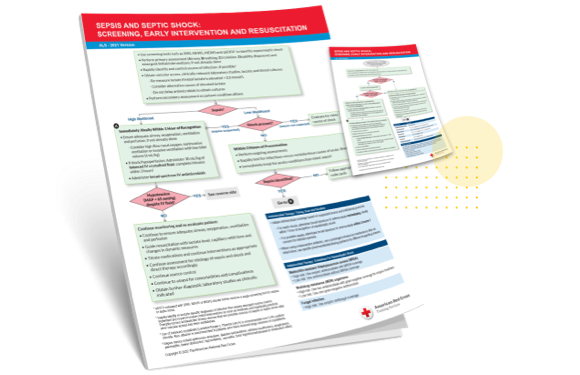
The American Red Cross Code Cards are visual flow charts for resuscitation care based on guidance found in the American Red Cross Focused Updates and Guidelines.
- Sepsis Code Card - Now Included!
A closer look at the science of CPR
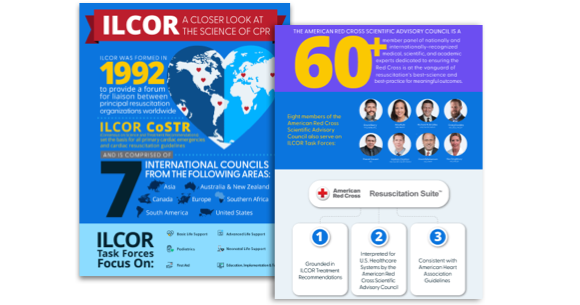
This infographic outlines the origin of CPR science from ILCOR & CoSTR. Download this resource to better understand what ILCOR Task Forces focus on, and how the American Red Cross Scientific Advisory Council contributes to resuscitation training.
Have a question about the science behind resuscitation education?
Complete the form to submit a question or to talk with a HealthStream expert about adding flexibility to your resuscitation program.


