Healthcare regulatory compliance protects patients, reduces risk, and supports quality care. HealthStream combines over 30 years of healthcare expertise with innovative solutions to simplify compliance and strengthen workforce readiness.

For more than 30 years, HealthStream® has helped healthcare organizations build a culture of safety and compliance–with a modern learning experience that adapts to individual needs to meet HIPAA, OSHA, CMS and HHS regulatory compliance.

As regulations evolve and scrutiny intensifies, protect your organization and stay prepared for CMS, OSHA, HIPAA, and Joint Commission requirements.
Purpose-built solutions that reduce risk, strengthen workforce readiness, and support safer patient care.


Move compliance forward with AI-powered policy search that makes critical information easy to find, keeps teams accountable, and reduces risk across your organization.
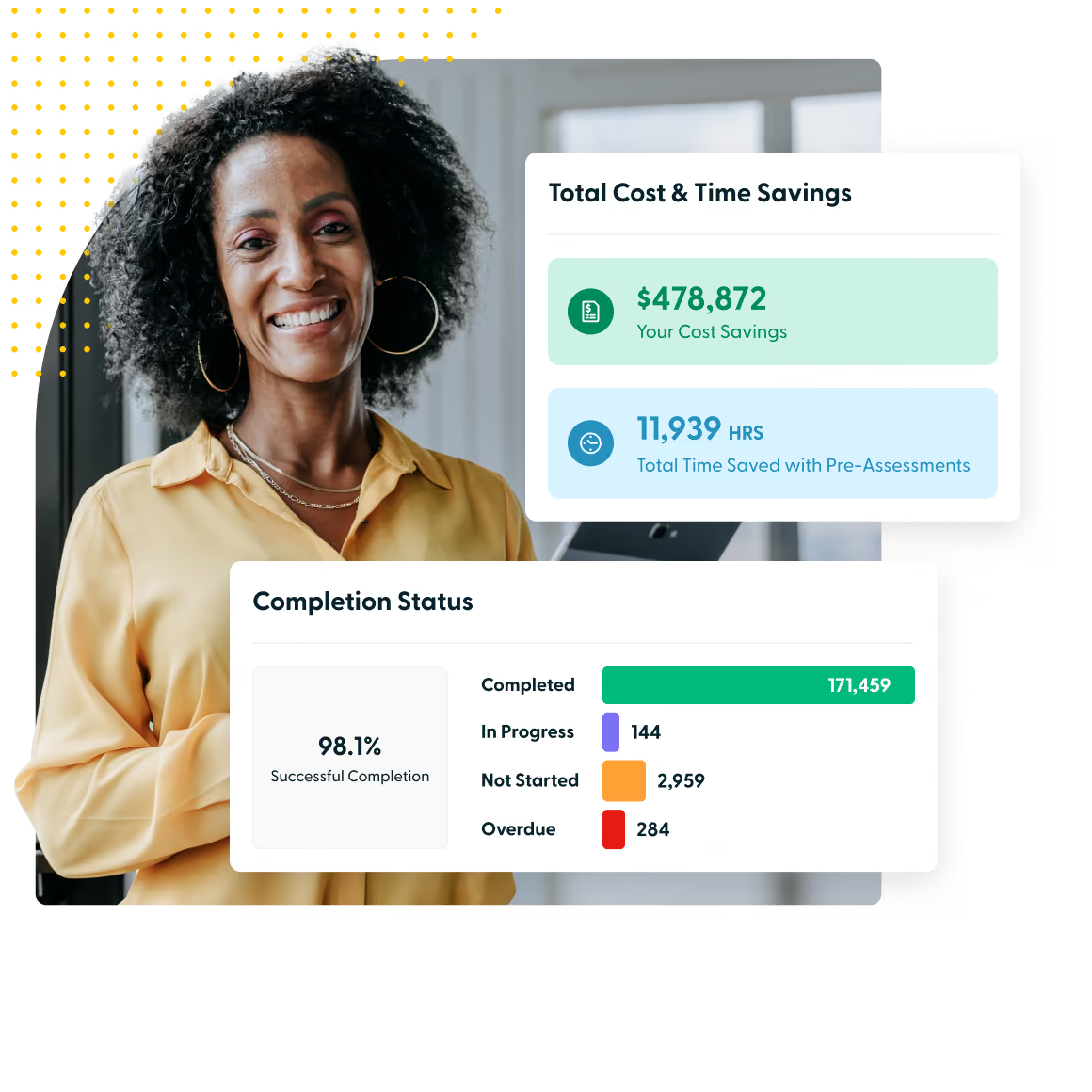

HealthStream Compliance Suite simplifies workforce training and policy changes, helping organizations stay ahead of evolving regulations.

The right compliance partner helps you navigate changing regulations, reduce risk, and build a stronger, more resilient healthcare organization.
Regulatory compliance in healthcare is the process of ensuring healthcare organizations meet applicable federal and state laws, regulatory requirements, and accreditation standards to protect patients, maintain quality of care, and reduce organizational risk. An effective healthcare compliance program addresses requirements from agencies such as CMS, OSHA, and HHS, including HIPAA regulations, while supporting ongoing training, policy management, risk assessments, and audit readiness. With over 30 years of healthcare expertise, HealthStream helps organizations navigate complex healthcare compliance regulations through innovative technology, regulatory intelligence, and workforce education. These integrated capabilities help healthcare leaders reduce administrative burden, strengthen accountability, protect financial performance, and maintain a proactive approach to regulatory compliance.
Regulatory compliance in healthcare is a shared responsibility across leadership, compliance officers, department managers, and frontline employees. While healthcare compliance officers typically oversee regulatory monitoring, risk assessments, policy development, and reporting, executive leadership and governing boards are responsible for establishing accountability and providing the resources needed to maintain an effective healthcare compliance program. Every employee also plays a critical role in meeting healthcare compliance regulations through ongoing training, adherence to organizational policies, and reporting potential risks. HealthStream supports this shared responsibility with innovative healthcare regulatory compliance solutions that combine AI-driven regulatory intelligence, role-specific education, automated policy management, and enterprise-wide visibility into compliance performance. Together, these capabilities help healthcare organizations strengthen accountability, reduce regulatory risk, and build a sustainable culture of compliance.
Regulatory compliance in healthcare is a shared responsibility across leadership, compliance officers, department managers, and frontline employees. While healthcare compliance officers typically oversee regulatory monitoring, risk assessments, policy development, and reporting, executive leadership and governing boards are responsible for establishing accountability and providing the resources needed to maintain an effective healthcare compliance program. Every employee also plays a critical role in meeting healthcare compliance regulations through ongoing training, adherence to organizational policies, and reporting potential risks. HealthStream supports this shared responsibility with innovative healthcare regulatory compliance solutions that combine AI-driven regulatory intelligence, role-specific education, automated policy management, and enterprise-wide visibility into compliance performance. Together, these capabilities help healthcare organizations strengthen accountability, reduce regulatory risk, and build a sustainable culture of compliance.
Hospitals and post-acute care providers must comply with federal and state healthcare regulations, but specific requirements vary by care setting, services provided, and patient populations served. Hospitals must meet applicable CMS Conditions of Participation, HIPAA privacy and security requirements, OSHA workplace safety standards, and relevant accreditation standards, while post-acute providers, including skilled nursing facilities, home health agencies, and hospice organizations, face additional setting-specific CMS requirements, state licensing regulations, and quality reporting obligations. An effective healthcare compliance program must account for these differences through tailored regulatory monitoring, policy management, workforce education, and healthcare compliance audit readiness. With over 30 years of healthcare expertise, HealthStream supports regulatory compliance in healthcare through role- and setting-specific training, AI-driven regulatory intelligence, and tools that help organizations manage evolving requirements across the continuum of care. These capabilities help healthcare leaders reduce administrative burden, strengthen regulatory readiness, and protect quality of care across diverse healthcare settings.
Healthcare compliance training should be completed during employee onboarding and at regular intervals based on applicable federal and state regulations, accreditation standards, organizational policies, and job-specific responsibilities. While annual training is common, certain healthcare compliance regulations, workforce roles, and changes in regulatory requirements may require more frequent education or competency assessments. An effective healthcare compliance program should include ongoing regulatory monitoring, role-specific training, automated completion tracking, and documentation to support healthcare compliance audit readiness. HealthStream simplifies healthcare regulatory compliance training through expert-developed education, adaptive learning, pre-assessments, and reporting tools that help organizations maintain workforce competency while reducing unnecessary training time. These capabilities help healthcare leaders strengthen regulatory readiness, improve operational efficiency, and reduce the risk of costly compliance gaps.
An effective healthcare compliance program should include clear policies and procedures, designated compliance leadership, ongoing risk assessments, employee training, regulatory monitoring, and processes for reporting and addressing potential violations. Healthcare organizations must also establish consistent documentation, auditing, and reporting practices to demonstrate accountability and support healthcare compliance audit readiness. With over 30 years of healthcare expertise, HealthStream helps organizations strengthen regulatory compliance through AI-driven regulatory intelligence, role-specific education, automated policy management, and enterprise-wide visibility into compliance risks. These integrated capabilities help healthcare leaders navigate evolving healthcare compliance regulations, reduce administrative burden, improve workforce accountability, and protect their organizations from costly compliance gaps.
Non-compliance in healthcare can result in significant financial and operational consequences, including regulatory fines, legal expenses, reimbursement penalties, lost revenue, and reputational damage. Violations of healthcare compliance regulations, including HIPAA, OSHA, and applicable CMS requirements, may also lead to corrective action plans, increased regulatory scrutiny, or disruptions to patient care and operations. A proactive healthcare compliance program helps organizations identify risks early, maintain regulatory readiness, and reduce exposure to costly violations. With over 30 years of healthcare expertise, HealthStream helps organizations strengthen regulatory compliance through AI-driven regulatory intelligence, targeted workforce training, automated policy management, and enterprise-wide compliance visibility. These capabilities help healthcare leaders protect cash flow, reduce administrative costs, and safeguard the financial and operational health of their organizations.
HealthStream helps healthcare organizations protect revenue, reduce regulatory risk, and improve operational efficiency through: